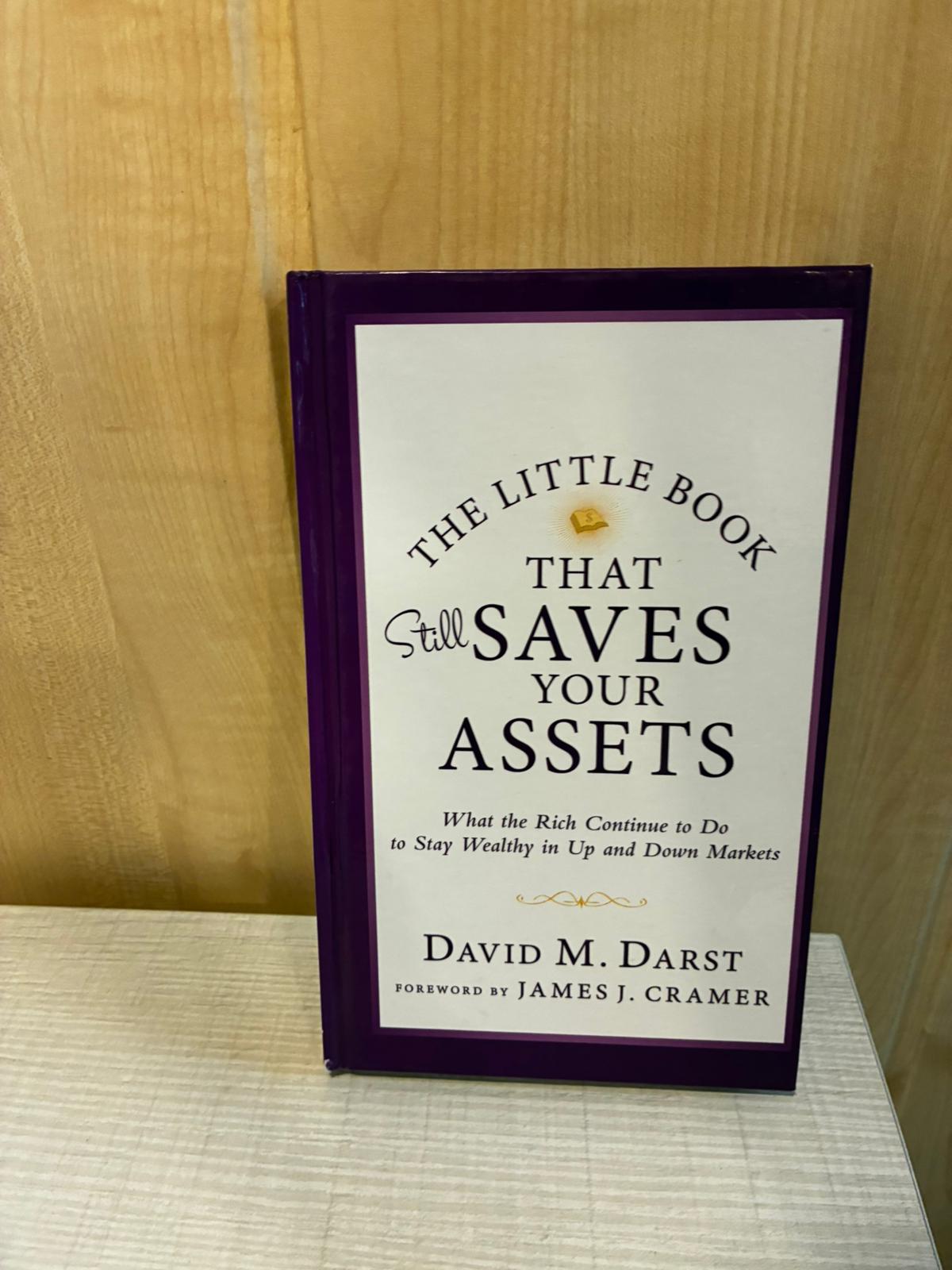
The Little Book That Still Saves Your Assets
Easy
December 2024
A clear, no-nonsense guide to building wealth through time. It won't make you rich overnight — but it will teach you to think about money in a way your future self will thank you for.
What is this book about?
David Darst's The Little Book That Still Saves Your Assets is a compact, accessible guide to the principles of asset allocation — the art of spreading your investments across different types of assets to build wealth sustainably over time. It's not a get-rich-quick manual. It's the opposite: a thoughtful, patient explanation of how to think about money, risk, and long-term growth.
The book walks you through the fundamentals: what asset classes exist, how they behave differently under various market conditions, why diversification actually works (and isn't just a buzzword), and how to build a portfolio that matches your personal risk tolerance and financial goals. Darst writes with the kind of clarity that makes you feel like you're having a conversation with a knowledgeable friend rather than reading a finance textbook.
Who is this book for?
Honestly? Everyone. And I mean that.
Maybe you're someone who has never thought about investing and finds the whole world of finance intimidating. This book is for you — it starts from the basics and never talks down to you. Or maybe you've already started investing but don't really have a framework for why you're doing what you're doing. This book will give you that framework.
Two years ago I developed a serious interest in finance and investment, but I knew close to nothing about it. This wasn't the first book I read on the subject, but it was the one that pulled everything together. It taught me to ask the right questions: What kind of returns are realistic? What level of risk can I actually stomach? What does a sustainable strategy look like — not for some abstract "investor," but for me?
Even if you genuinely don't care about investing or money — and that's a perfectly valid position — this little book can still have a real impact on your financial future. Your future self will thank you for the few hours it takes to read it.
Personal opinion — is it worth it?
Let me be honest: after reading this book, you will not suddenly start making amazing profits or become wealthy overnight. That's not what it's for. What it will do is teach you to understand which investment strategy fits your needs, and — just as importantly — help you figure out what those needs actually are.
You'll learn what a good return on investment actually looks like. You'll understand the difference between sustainable growth and speculation. You'll start to question your own tolerance for risk and learn why managing that tolerance is one of the most important financial skills you can develop.
There's a quote from the book that stuck in my mind and I think captures its spirit perfectly:
"As you move through life, get an education, and develop the skills that will help you succeed in your career, you become the owner of a critical asset, your human capital. This is your lifetime earnings potential. How much of this human capital you will be able to turn into financial capital depends on several things. How much you earn, how much you spend, your lifestyle choices, and how you plan for and deal with taxes and inflation or deflation will all affect how much human capital you will be able to turn into financial capital over time."
That reframing — thinking of yourself as an asset, and your career as capital that you convert over a lifetime — changed how I think about not just investing, but work and life in general. It's the kind of perspective shift that makes a book worth reading on its own.
Difficulty
This is an easy read. Darst writes clearly, avoids unnecessary jargon, and structures the book in a way that builds naturally from one concept to the next. You don't need any prior financial knowledge to follow along — everything is explained from the ground up.
It's a short book too, which helps. You can comfortably get through it in a few sittings, and you'll walk away with a solid mental model for thinking about your finances. The "little book" format works perfectly here: no filler, no padding, just the ideas you need.
The score
4.5 / 5
A genuinely useful book that I'd recommend to anyone regardless of their interest in finance. The only reason it's not a full 5 is that I would have appreciated a bit more depth on some of the more advanced allocation strategies — but for its intended audience (which is basically everyone), it hits exactly the right notes. Clear, practical, and quietly life-changing.