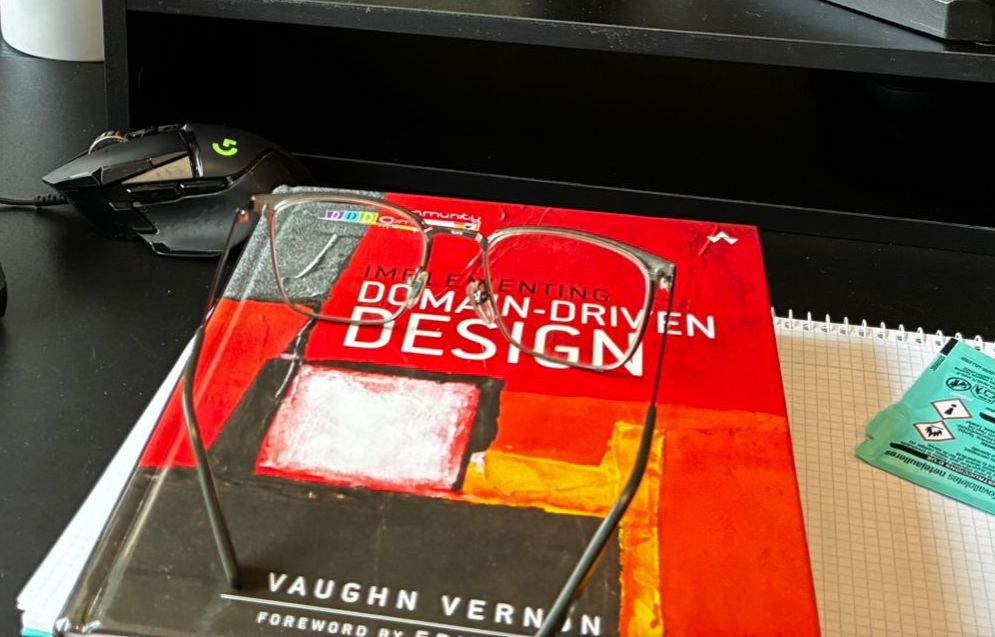
Implementing Domain-Driven Design
Medium
February 2026
The book that finally made all the DDD pieces click. Vernon fills every gap Evans' classic left open and teaches you to see code differently.
What is this book about?
Vaughn Vernon's Implementing Domain-Driven Design is the practical companion to Eric Evans' classic blue book. Where Evans laid the philosophical foundation, Vernon rolls up his sleeves and shows you how DDD actually works when you sit down to write code.
It walks through every tactical pattern — entities, value objects, aggregates, domain events, bounded contexts, context mapping — and glues them together with a running example you can actually follow. It's the book that connects the why of DDD to the how.
Who is this book for?
This is not the book to start your DDD journey with. I'd recommend the opposite, actually: get your feet wet first, read the basics, try applying DDD to a small project, and feel the gaps in your understanding start to ache. Then open this book.
If any of these apply to you, you'll get enormous value from it:
- You've read Evans' blue book (or parts of it) and still feel like something is missing
- You've been applying "DDD" to personal projects but can't shake the feeling you're doing it wrong
- You understand aggregates and value objects in theory but struggle with the boundaries
- You want to understand the why behind each pattern, not just mimic them
Personal opinion — is it worth it?
I came into this book with some baggage — I had already read Evans' classic, seen DDD concepts in my master's degree during Software Architecture II, and had been applying "DDD" to my personal projects. And yet, something was always missing. I could follow the rules, but I didn't really understand the bigger picture. This book filled every single one of those gaps.
This book taught me to see code differently — to understand the why behind each concept instead of following it blindly.
After finishing it (combined with everything I had read before), I can now genuinely sense when a design is about to get out of hand, and I can react accordingly. That alone is worth the price of admission. Vernon's writing is generous and detailed. It's extensive, sure, but every page earns its place.
If you want to get serious about DDD and you don't have a great mentor sitting next to you, this book is the next best thing. I can't recommend it enough. :))
Difficulty
It's a dense read, but not academic in a painful way. Vernon writes clearly and gives you plenty of code examples and context. That said, this is not a weekend read — plan to take your time, and expect to revisit chapters once you've had a chance to apply the ideas.
If you come in cold without any DDD exposure, you'll likely drown. With the basics already in your toolkit, it feels challenging but natural.
The score
5 / 5
A book that genuinely changed how I think about software design. It filled every gap, validated the instincts I was still forming, and gave me a way to sense problems before they become real. Easy 5.